
A Green Creative Agency is a creative, strategic, and digital partner that helps organizations communicate their environmental work with clarity, credibility, and care. It is not just an agency that adds green colors to a website or writes a few lines about sustainability. It is a partner that understands how branding, messaging, web design, marketing, and production choices all shape the way people judge a company’s environmental values.
For purpose driven businesses, nonprofits, conservation groups, clean energy companies, green builders, outdoor brands, and sustainable product companies, this matters. The audience is paying attention. People want to know what a brand stands for, what it is doing, and whether its claims are real. They are not looking for perfect companies. They are looking for honest ones.
That is where a green creative agency becomes valuable. It gives organizations a way to turn real environmental commitments into a brand people can understand, a website people can trust, and a marketing system that supports growth without drifting into vague or exaggerated claims.
Why Green Creative Agency Work Is No Longer Optional
Ten years ago, many companies could publish a sustainability page, mention recycling, and move on. That is no longer enough. Customers, employees, partners, investors, and communities expect more evidence now. They want to understand what a business is actually doing, not only what it says it believes.
Climate change is no longer an abstract topic. It affects supply chains, insurance costs, food systems, water use, real estate, tourism, public health, and local economies. Biodiversity loss is changing the way conservation groups, outdoor brands, municipalities, and land based businesses think about their role. Waste, emissions, packaging, energy use, and responsible sourcing are no longer side issues. They are part of how brands are evaluated.
According to the U.S. Environmental Protection Agency, sustainability connects environmental responsibility with long term economic and social performance. That framing is important because it shows that sustainability is not only a moral issue. It is also a business issue, a trust issue, and a resilience issue.
This is why green creative agency work has moved from a nice idea to a serious business need. The way a brand communicates its environmental commitments can either strengthen trust or weaken it. A polished campaign without substance can feel manipulative. A real commitment explained poorly can be overlooked. The right creative partner helps close that gap.
The goal is not to make every company sound like a nonprofit. The goal is to make the brand’s environmental story clear, specific, and believable. When that story is supported by real action, it becomes one of the strongest assets a company has.
What Makes a Green Creative Agency Different
A traditional creative agency helps a brand look better, sound sharper, and reach more people. Those skills still matter. Strong design still matters. Clear messaging still matters. Good websites still matter. But a green creative agency works from a different starting point.
The difference is the lens. Sustainability, ethics, long term thinking, and public accountability are not added at the end of the process. They shape the brief from the beginning. They influence the claims a brand makes, the imagery it uses, the website it builds, the partners it chooses, and the way it measures success.
Instead of asking only, “What will get attention?” the agency also asks, “Is this true?” Instead of asking only, “What will convert?” it asks, “Will this build trust after someone looks closer?” Instead of chasing the loudest message, it looks for the most credible one.
| Traditional Creative Agency | Green Creative Agency |
|---|---|
| Focuses mainly on visibility and conversion. | Focuses on visibility, trust, impact, and long term credibility. |
| May use sustainability as a campaign theme. | Treats sustainability as part of the strategy, not decoration. |
| Often relies on broad emotional claims. | Builds messaging around specific, supportable claims. |
| May follow visual trends quickly. | Builds durable identities that can last and grow. |
| Measures success through traffic, clicks, and leads. | Measures growth alongside trust, clarity, engagement, and reputation. |
| May not question production or digital waste. | Considers performance, production choices, vendor ethics, and resource use. |
This shift changes the work. The creative becomes more grounded. The strategy becomes more careful. The brand becomes easier to believe. That is especially important for organizations working in sustainability, where audiences are often skeptical for good reason.
A quick note on names. You will see this type of partner called a green creative agency, a sustainable marketing company, an eco-friendly marketing agency, or an environmentally focused creative agency. The label changes, but the work does not: strategy, branding, web design, and marketing built around credible environmental commitments. Throughout this guide, we use these terms interchangeably.
Green Creative Agency Branding: Building Identity With Purpose
Branding is one of the clearest places where an green creative approach makes a difference. A brand identity is not just a logo. It is the system people use to recognize, remember, and trust an organization. For sustainable brands, that system needs to do more than look attractive. It needs to feel honest.
That begins with discovery. Before colors, typography, or visual direction are chosen, the agency needs to understand what the organization actually does. What is its mission? Who does it serve? What environmental commitments are already in place? What claims can be supported? What is still in progress? Where is there a gap between the brand’s internal reality and the way it presents itself?
This part of the process is not glamorous, but it is where the real value begins. A brand cannot communicate clearly if the thinking underneath it is unclear. Many organizations are doing meaningful work, but their message is scattered across old brochures, outdated web pages, grant language, internal documents, and founder stories. A good agency helps bring those pieces together into one coherent identity.
The visual identity then grows from that foundation. Color palettes, typography, imagery, icon systems, layouts, and motion choices should all support the brand’s actual character. A conservation organization may need a quiet, institutional identity that builds confidence. A sustainable product company may need a warmer, more consumer friendly system. A clean technology company may need to balance innovation with trust. There is no single visual formula for sustainability.
Good sustainable branding also avoids the obvious trap. Not every environmental brand needs a leaf icon. Not every nonprofit needs forest green. Not every climate organization needs photos of hands holding soil. Those choices can work, but only when they are earned. Otherwise, they make a brand look like everyone else.
Digital Design Through a Green Creative Agency Lens
Websites are often treated as intangible, but they have a footprint. Every page load uses energy. Every oversized image, unnecessary script, background video, tracking tool, and bloated plugin adds weight. Multiply that by thousands of visitors and the cost becomes real.
Sustainable web design does not mean stripping a website down until it feels empty. It means making smarter choices. Images should be compressed and properly sized. Code should be clean. Hosting should be considered. Pages should load quickly. The user experience should be simple enough that people can find what they need without fighting the interface.
The good news is that sustainable digital design usually improves business performance too. A faster website is better for users. It is better for SEO. It is better for mobile visitors. It is better for conversion. In most cases, performance and sustainability are not in conflict. They are pointing in the same direction.
For green creative organizations, this is especially important. If a company talks about resource efficiency but its website takes ten seconds to load because of uncompressed images and heavy scripts, there is a disconnect. Visitors may not describe it that way, but they can feel it. A slow, cluttered website makes the organization feel less disciplined.
Digital sustainability is also about content. A website filled with thin, disposable articles is not serving anyone. Better content is usually slower to create, but it lasts longer. It answers real questions. It supports search visibility. It gives sales teams, fundraisers, board members, and partners something useful to share.
Marketing Campaigns That Communicate Real Green Commitments
Marketing is where many sustainability claims get into trouble. Every brand wants to tell a positive story. Every company wants to appear responsible. But if the campaign is more ambitious than the facts behind it, the result can feel hollow or misleading.
An green creative agency helps clients slow down enough to get the message right. What has already been achieved? What is still being improved? What can be measured? What should be avoided? What would invite criticism? What would genuinely help the audience understand the work?
That does not mean the marketing has to be timid. Specific claims are often more powerful than broad ones. A company that can explain how it reduced packaging waste, changed materials, improved sourcing, protected habitat, funded restoration, or improved energy use has a much stronger story than a company that simply says it is eco friendly.
Good environmental marketing also allows room for progress. A brand does not need to pretend it has solved everything. In many cases, audiences trust companies more when they are honest about what is complete, what is in progress, and what still needs work. Perfection is usually less believable than transparency.
The Greenwashing Problem and How a Green Creative Agency Solves It
Greenwashing happens when environmental claims are misleading, exaggerated, vague, or unsupported. Sometimes it is intentional. Often it is not. A company may use a phrase like “green,” “natural,” “clean,” or “planet friendly” because it sounds good, without realizing that the claim needs context and evidence.
The risk is not only reputational. Environmental claims are receiving more scrutiny from regulators, advocacy groups, journalists, customers, and competitors. The Federal Trade Commission’s Green Guides explain how environmental marketing claims should be substantiated in the United States. Any brand making public sustainability claims should take that seriously.
Creative strategy can help prevent greenwashing by making the message more precise. Instead of saying “we are sustainable,” a brand can explain what it has changed, how it measures progress, what standards it follows, and where customers can learn more. Instead of hiding complexity, the brand can make the complexity easier to understand.
That is one of the most valuable roles a green creative agency can play. It does not only make a brand more appealing. It helps the brand communicate in a way that can withstand scrutiny.
The Planet Media Sustainable Growth Framework
At Planet Media, we think of green creative work as a sequence. A brand becomes stronger when strategy, identity, digital presence, and marketing are connected. When those pieces are built separately, the result often feels fragmented. When they are built together, the organization becomes easier to understand and easier to trust.
| Phase | What It Means | Why It Matters |
|---|---|---|
| Discover | Understand the organization, audience, mission, claims, and competitive context. | Good creative work starts with a clear picture of what is true. |
| Define | Clarify positioning, messaging, voice, values, and audience priorities. | Clear strategy prevents vague branding and scattered communication. |
| Design | Build the visual identity, website direction, content structure, and creative system. | Design turns strategy into something people can recognize and remember. |
| Develop | Create the website, campaign assets, landing pages, content, and growth tools. | The brand needs to work in real life, not only in a presentation. |
| Grow | Use SEO, content, email, social, analytics, and AI supported workflows to improve reach. | Long term impact depends on consistent communication and smart systems. |
This framework is simple on purpose. Most organizations do not need more complexity. They need a partner who can help them make better decisions in the right order.
Production Choices and the Supply Chain of Creative Work
Creative work has a supply chain. Print materials require paper, ink, packaging, and transportation. Photography and video production involve equipment, travel, lighting, props, food, and waste. Websites rely on hosting, devices, software, images, scripts, and data. Even a simple campaign has choices behind it.
An green creative agency pays attention to those choices. It may recommend digital materials instead of print when appropriate. When print is needed, it may look for recycled paper, certified paper, responsible printers, vegetable based inks, or shorter production runs. For digital work, it may prioritize lightweight assets, efficient design systems, and content that will remain useful longer.
None of these choices needs to become a performance. The point is not to turn every production decision into a press release. The point is to make the better choice whenever possible and to help clients understand the tradeoffs.
Internal Operations: How a Green Creative Agency Walks the Talk
Credibility starts inside the agency. A creative partner that advises clients on sustainability should be willing to look at its own habits too. That includes how the team works, what vendors it chooses, how often it travels, how it manages digital files, and what kinds of clients it is willing to support.
Remote and hybrid work can reduce commuting. Digital first workflows can reduce unnecessary printing. Better file management can reduce digital clutter. Thoughtful vendor selection can support companies with stronger environmental practices. Some agencies also pursue third party certifications, such as B Corp Certification, to verify broader social and environmental performance.
Certification is valuable, but it is not the only sign of integrity. What matters most is whether the agency makes consistent choices that match its values. A sustainability focused agency should be able to explain not only what it creates, but how it thinks.
Who Benefits Most From a Green Creative Agency Partnership
The organizations that benefit most from this kind of partnership usually have one thing in common. They are doing meaningful work, but their brand does not fully communicate it yet.
That may include a conservation nonprofit with a dated website, a sustainable product company with inconsistent packaging, a clean energy firm that sounds too technical for a general audience, a green building company that needs better lead generation, or a mission driven organization preparing for growth.
It can also include companies that are still early in their sustainability journey. Not every client arrives with a perfect story. A responsible agency can help them communicate honestly about where they are, what they have already improved, and what they are working toward. That honesty is far better than pretending to be further along than they are.
- Environmental nonprofits and conservation organizations
- Clean energy companies
- Sustainable consumer goods brands
- Green building and architecture firms
- Outdoor and nature based brands
- Regenerative agriculture and food businesses
- Climate technology companies
- Foundations, coalitions, and public awareness initiatives
- Purpose driven companies that want to improve their environmental communication
Real World Example: Rebranding Green Business Network
One of the clearest examples of green creative work in practice is Planet Media’s rebrand for Green Business Network. The challenge was not simply to make the organization look more polished. The deeper challenge was to create an identity system that could communicate trust, professionalism, and environmental responsibility across many different touchpoints.
Green Business Network needed a brand that could speak to sustainable businesses, members, partners, and the broader public. Its identity had to feel credible without becoming cold. It had to feel environmental without falling into generic green branding. It also needed to work across certification materials, web pages, digital communications, and marketing assets.
The Challenge
The organization had real value behind it, but the brand system needed to better reflect that value. Like many mission driven organizations, the work had grown over time. Different materials had been created for different needs. The result was useful, but not as unified or as strong as it could be.
The goal was to create a clearer identity that could support recognition, trust, and growth. This meant thinking beyond a single logo. The brand needed a complete visual system that could work in the real world.
Our Approach
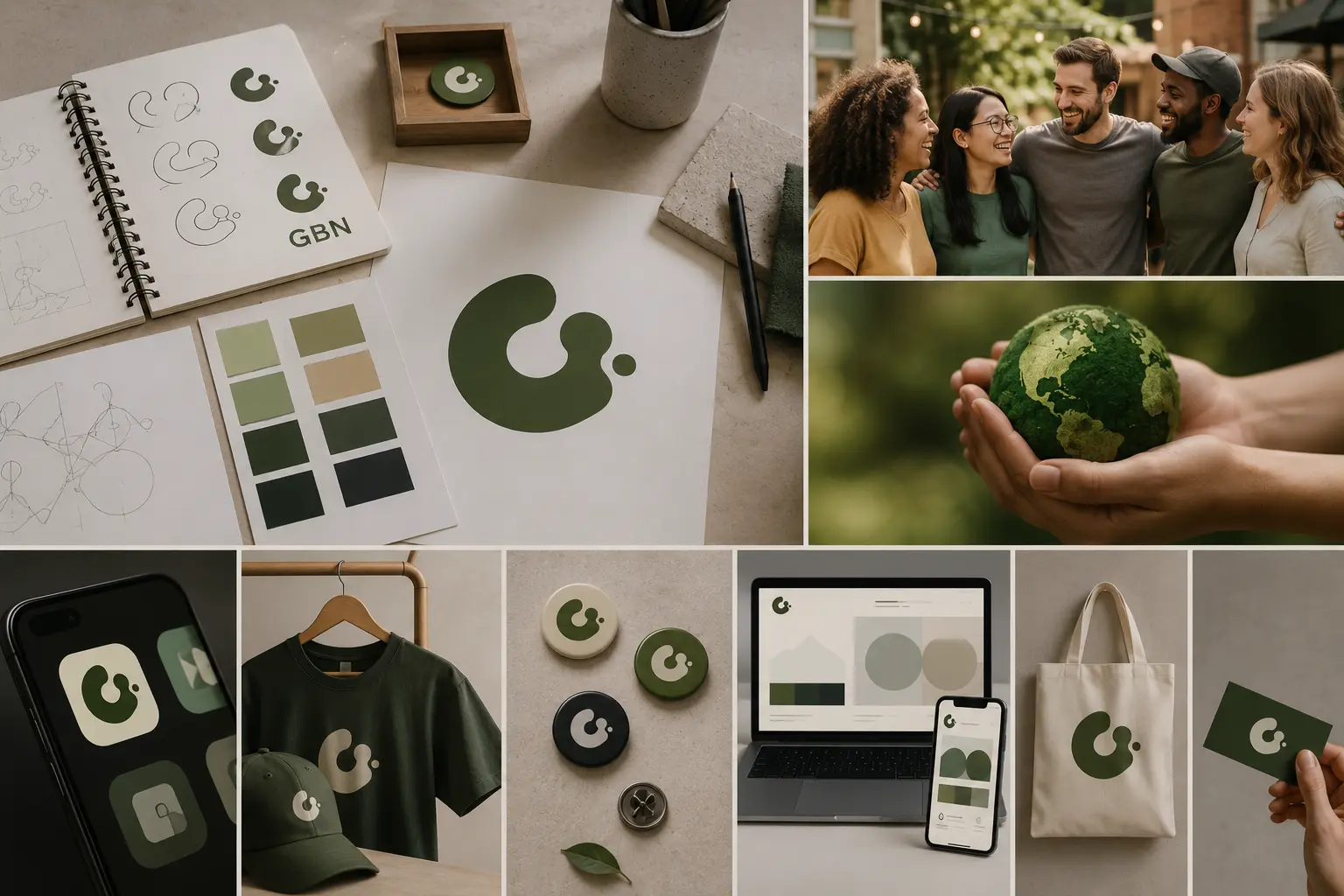
Planet Media approached the project as a strategic identity system, not a surface level refresh. The work included logo redesign, brand direction, certification badge design, website design support, landing page elements, banners, and supporting visual assets.
The certification badges were especially important. For a network built around responsible business practices, badges are not just decorative marks. They are trust signals. They need to be clear, recognizable, professional, and easy to use across different formats.
The visual direction had to balance environmental warmth with business credibility. Too soft, and the brand could feel informal. Too corporate, and it could lose the human, values driven quality that makes the organization meaningful. The final system needed to live between those two worlds.
The Result
The redesigned brand gave Green Business Network a stronger and more consistent presence. It helped the organization present itself with more clarity across digital and marketing materials. It also created a more professional system for communicating membership, certification, and credibility.
The lesson from this project is simple. Green creative branding is not about making something look greener. It is about making a mission easier to understand and easier to trust.
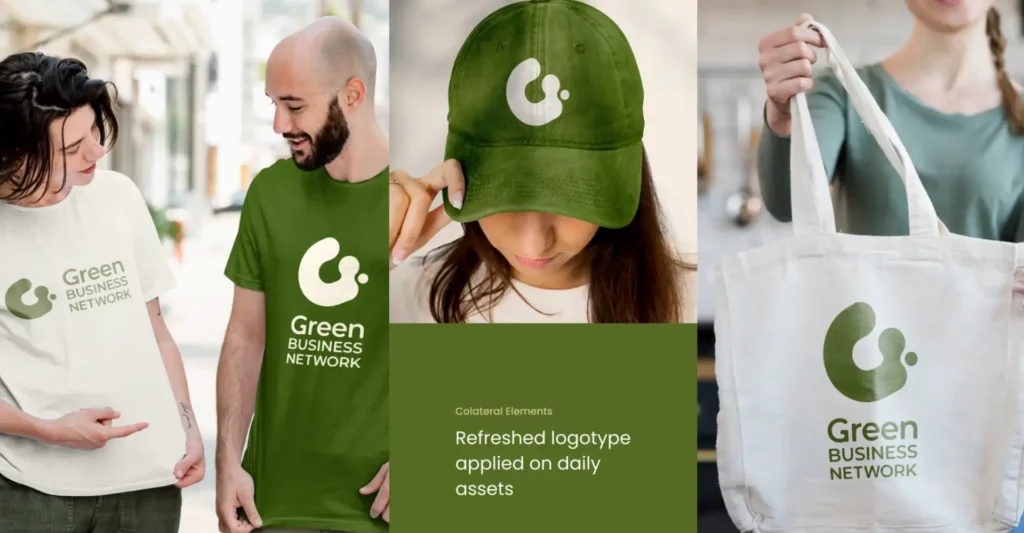
The most valuable green creative work is not a one time campaign. It is a long term system for building recognition, clarity, and trust. A brand becomes stronger when its messaging, visuals, website, content, and public claims all point in the same direction.
Trust is cumulative. Every page on the website, every social post, every email, every certification badge, every case study, and every public statement contributes to the way people understand the organization. If those pieces are inconsistent, the brand feels weaker. If they are aligned, the brand becomes easier to believe.
This kind of brand value is difficult for competitors to copy. A competitor can imitate colors, layouts, or language. It cannot easily copy a history of consistent, honest, specific environmental communication. That history becomes part of the brand’s credibility.
Sustainable Branding Readiness Checklist
Before hiring a green creative agency, it helps to understand where your brand stands today. You do not need to have every answer, but these questions can reveal where strategy, messaging, design, or digital experience may need attention.
- Can you explain your environmental mission in one clear sentence?
- Are your sustainability claims specific and supportable?
- Does your website make your impact easy to understand?
- Do your visuals feel distinctive, or do they look like every other green brand?
- Are your logo, colors, badges, and marketing materials consistent?
- Can visitors quickly understand who you help and why it matters?
- Is your website fast, mobile friendly, and easy to navigate?
- Do you have case studies or proof points that support your claims?
- Are you avoiding vague words like green, natural, and eco friendly unless they are explained?
- Do your internal team members describe the brand in the same way?
If several of these answers feel unclear, that is usually a sign that the brand does not need more content yet. It needs a stronger foundation.
Why Planet Media Chose to Become a Green Creative Agency
Planet Media has been building brands, websites, and digital experiences for many years. Over time, we became more interested in working with organizations that were trying to create something useful, responsible, and lasting. Not every project needs to save the planet, but the work should move in a direction we can stand behind.
That choice changed the way we think about creative work. It made us more careful with language. It made us more interested in evidence. It made us less patient with empty claims and more committed to clarity. It also made the work more meaningful.
For us, green creative work is not about creating a perfect image for imperfect organizations. It is about helping serious organizations communicate better, grow with more integrity, and earn the trust they need to keep going.
Projects like Green Business Network reinforce that belief. When strategy, identity, design, and digital communication work together, a mission becomes easier for people to see. That is the real purpose of creative work in this space.
How to Choose a Sustainable Marketing Agency
Not every agency that puts “sustainable” on its homepage actually operates that way. Before committing to a partner, ask four questions.
Ask about their own practices. Do they have a written environmental policy? Do they use green hosting for their own website? Do they track their carbon footprint or have a remote-first policy that reduces emissions? An agency that cannot answer clearly is probably not as sustainable as it claims.
Ask about regulated environmental claims. Have they helped clients navigate FTC Green Guides compliance? Do they substantiate sustainability claims before they go to market? Can they show campaigns where they communicated sustainability honestly and effectively?
Ask about equity and accessibility. Sustainable marketing is not only environmental. Inaccessible design, homogeneous imagery, or exclusionary language fails the standard too.
Ask for references. A genuine sustainable marketing company will gladly connect you with values-aligned clients who can speak to both the quality of the work and the integrity of the process.
How a Green Creative Agency Measures Success
Sustainable agencies track two scorecards and treat both as equally important. On the conventional side: traffic, search rankings, conversion rates, customer acquisition cost, and return on ad spend, because marketing that does not generate results is not economically sustainable. On the impact side: accessibility compliance, the carbon footprint of digital campaigns, the accuracy of environmental claims across published materials, representation in creative assets, and brand trust among values-aligned customers. Together, these numbers create accountability and a fuller picture of performance, and they can feed directly into ESG reporting.
Frequently Asked Questions
What is a green creative agency?
A green creative agency is a branding, marketing, and digital partner that helps organizations communicate environmental values with clarity and credibility. It integrates sustainability into strategy, design, messaging, website development, and campaign planning.
How is a green creative agency different from a traditional agency?
A traditional agency may focus mainly on visibility, design, and conversion. An green creative agency also considers truthfulness, environmental claims, audience trust, production choices, website performance, and long term reputation.
What services does a green creative agency provide?
Services often include brand strategy, logo design, messaging, website design, SEO, content strategy, marketing campaigns, landing pages, email marketing, social media, and creative production. The difference is that these services are guided by sustainability and credibility.
Can a green creative agency help with rebranding?
Yes. Rebranding is often one of the most valuable services for mission driven organizations. A strong rebrand can clarify positioning, improve visual identity, strengthen messaging, and make the organization feel more credible to customers, donors, partners, or members.
Why does sustainable branding matter?
Sustainable branding matters because audiences are more skeptical of vague environmental claims. A strong brand helps an organization explain what it does, why it matters, and what evidence supports its message.
What is greenwashing?
Greenwashing is the use of environmental claims that are vague, exaggerated, misleading, or unsupported by evidence. It can damage trust and may create regulatory risk when claims cannot be substantiated.
How can creative strategy reduce the risk of greenwashing?
Creative strategy reduces greenwashing risk by clarifying what a brand can honestly claim, using specific language, supporting claims with evidence, and avoiding broad environmental promises that cannot be verified.
Does sustainable web design really matter?
Yes. Websites use energy through hosting, page loads, images, scripts, and devices. A faster, cleaner website can reduce unnecessary digital waste while improving SEO, user experience, and conversion.
Can sustainable web design improve SEO?
Yes. Sustainable web design often overlaps with SEO best practices because both benefit from faster load times, clean structure, optimized images, better mobile performance, and useful content.
Do nonprofits need green creative agency branding?
Many nonprofits benefit from it because their work depends on trust. Clear branding, strong messaging, and a professional website can help nonprofits attract donors, partners, volunteers, and community support.
What types of companies should work with this kind of agency?
Clean energy companies, conservation organizations, sustainable product brands, green builders, outdoor brands, regenerative agriculture businesses, climate technology companies, and purpose driven organizations are strong fits.
Can a company work with a green creative agency if it is still improving its sustainability practices?
Yes, as long as it is willing to communicate honestly. A responsible agency can help explain what has been achieved, what is in progress, and what still needs work without overstating the company’s impact.
How much does sustainable branding cost?
The cost depends on the scope. A focused brand refresh may be smaller, while a full identity system with messaging, website design, SEO, and marketing support requires a larger investment. The right scope should match the organization’s stage and goals.
How long does a sustainable rebrand take?
A focused rebrand may take several weeks. A larger project involving strategy, identity, website design, content, and launch planning may take several months. Review cycles and content approvals often influence the timeline.
What should we prepare before hiring an agency?
Prepare your mission statement, current brand materials, website analytics if available, customer or audience insights, sustainability claims, certifications, internal goals, and examples of brands you admire.
How do you measure ROI from green creative work?
ROI can be measured through website traffic, search visibility, lead quality, conversion rates, engagement, donor interest, member growth, brand consistency, and improved trust signals. Not every result is immediate, but strong brand clarity compounds over time.
Can a green creative agency help with AI and automation?
Yes. AI and automation can support content workflows, lead capture, email segmentation, customer service, research, and internal efficiency. The key is using these tools responsibly and in ways that still feel human.
Is green creative work only for environmental companies?
No. It is also useful for organizations that are improving their operations, reducing waste, launching responsible products, supporting conservation, or trying to communicate sustainability progress more clearly.
What makes a sustainable brand credible?
A credible sustainable brand is specific, consistent, transparent, and supported by evidence. It avoids vague claims and gives people enough information to understand what the organization is actually doing.
How can Planet Media help?
Planet Media helps purpose driven and green creative organizations with branding, web design, SEO, digital marketing, AI supported workflows, and creative strategy. The goal is to build clear, credible, and effective brand systems that support long term growth.
How can I tell if a marketing agency is genuinely sustainable?
Ask whether they have a written environmental policy, use green hosting, track their own carbon footprint, and can show FTC Green Guides compliance on past campaigns. An agency that lives its values can answer these questions specifically, not vaguely.
Is a sustainable marketing company the same as a green creative agency?
In practice, yes. Green creative agency, sustainable marketing company, eco-friendly marketing agency, and environmentally focused creative agency all describe the same kind of partner: one that builds strategy, branding, web design, and marketing around credible environmental commitments.
Ready to Work With a Green Creative Agency?
If your organization is doing meaningful environmental work but your brand, website, or marketing does not fully reflect it, that gap can cost you trust. It can also cost you opportunities.
Planet Media helps green creative and purpose driven organizations clarify their message, strengthen their visual identity, improve their digital presence, and communicate with more confidence.
Related Articles
- How Brands Stay Influential as Trends and Regulations Change
- Sustainable Brand Storytelling: How to Connect, Convert, and Create Real Impact
- Finding Your Environmental Organization’s Brand Voice
- Elevating Purpose Driven Brands for the Great Outdoors
- What Defines a Sustainable Brand in 2026?
- Sustainable Branding Agency Services
- Green Business Network Branding Case Study
- Our Sustainability Values

About the author
Kurt Whitt
Kurt Whitt is the founder and CEO of Planet Media, a sustainability focused marketing agency in Denver he has led since 1999. For over 25 years he has helped B Corps, nonprofits, and purpose driven brands turn their values into branding, web design, and marketing that build trust and inspire change.

Kurt Whitt
Planet Media
Founder and CEO of Planet Media, a sustainability focused marketing agency. 25+ years helping purpose driven brands grow through strategy, storytelling and design.
More about the team