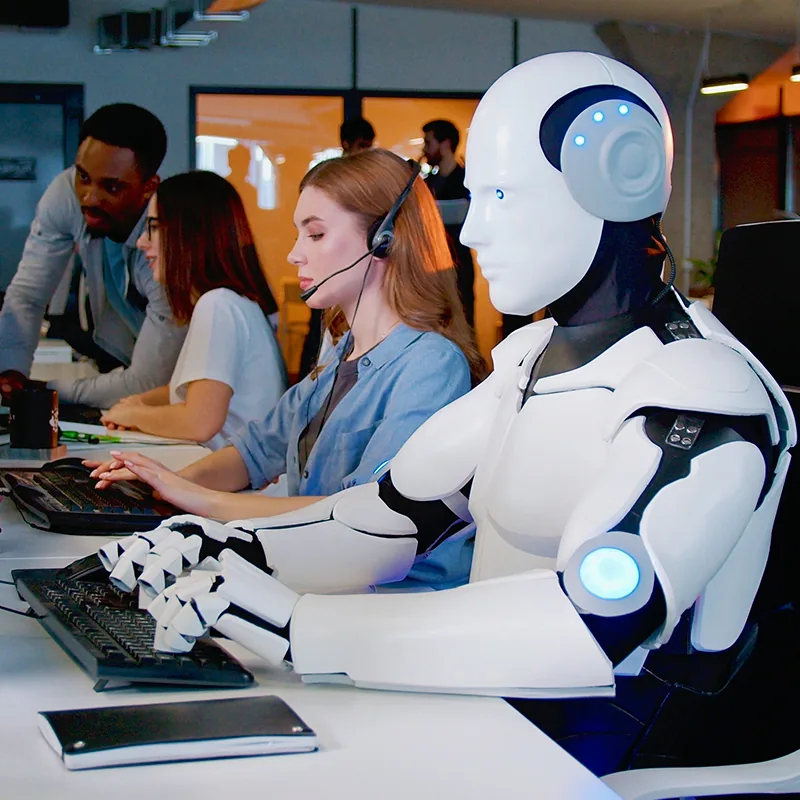
Artificial intelligence lead is no longer a concept confined to science fiction novels or academic white papers. It is a living, evolving force that is actively reshaping economies, environments, ethical frameworks, and the very definition of what it means to be human. The question is not simply whether AI will change the world. The question is whether humanity is prepared to guide that change responsibly, or whether we will allow it to spiral beyond our control. This article examines both sides of that debate with honesty, depth, and a clear eye toward what the evidence actually tells us.
Will Artificial Intelligence Help or Harm Humanity?
Whether artificial intelligence will lead us forward depends on the choices we make right now.
What Artificial Intelligence Actually Means for Human Civilization
When researchers and technologists talk about artificial intelligence, they are referring to the accelerating pace at which AI systems are outpacing human decision-making in specific domains. From diagnosing cancer in medical imaging to predicting climate patterns and writing legal briefs, AI is demonstrating capabilities that were unimaginable just a decade ago. This is not a slow, incremental shift. It is a rapid transformation that is compressing decades of change into just a few years.
The core concern is not that AI is inherently malicious. Most AI systems have no intentions at all. They are pattern-recognition engines trained on massive datasets. The concern is that as these systems grow more capable, the gap between what they can do and what humans can oversee or understand grows wider. That gap is where risk lives. Understanding the nature of that risk is the first step toward managing it wisely.
It is also important to recognize that artificial intelligence is not a single technology. It is a broad family of tools including machine learning, deep learning, natural language processing, computer vision, and reinforcement learning. Each of these branches has its own strengths, limitations, and risk profiles. Treating AI as a monolithic threat or a monolithic savior misses the nuance that responsible policy and business strategy require.
The Technological Singularity: Real Threat or Distant Speculation?
The concept of the technological singularity refers to a hypothetical future point at which artificial general intelligence, or AGI, surpasses human cognitive ability across every domain and becomes capable of improving itself recursively. At that point, the argument goes, human beings would no longer be the most intelligent agents on the planet, and the consequences would be unpredictable and potentially irreversible.
Researchers at institutions like the Future of Humanity Institute at Oxford University have spent years modeling these scenarios. Their findings suggest that expert predictions about when or whether AGI will arrive vary enormously, with estimates ranging from a few decades to well over a century. Some researchers believe AGI is inevitable. Others argue that current AI systems, despite their impressive performance on narrow tasks, lack the general reasoning, common sense, and contextual understanding that would be required to pose an existential threat.
What most serious researchers agree on is this: the question deserves serious attention now, before the technology matures, rather than after. Building safety protocols, governance frameworks, and international cooperation into the development process is far easier than retrofitting them onto systems that are already deployed at scale. The window for proactive action is open, but it will not stay open forever.
Artificial Intelligence and the Global Workforce: Disruption and Opportunity
One of the most immediate and tangible ways that artificial intelligence is affecting human life is through its impact on employment. Automation powered by AI is already displacing workers in manufacturing, logistics, customer service, data entry, and increasingly in professional fields like law, accounting, and radiology. The McKinsey Global Institute has estimated that hundreds of millions of jobs worldwide could be affected by automation in the coming decades.
However, history offers a more complicated picture than simple displacement. Every major technological revolution, from the industrial revolution to the rise of the internet, has eliminated categories of work while simultaneously creating new ones. The printing press put scribes out of work but created publishing industries. The automobile eliminated blacksmiths but created mechanics, engineers, and urban planners. The question is not whether new jobs will emerge, but whether the transition will be managed in a way that is fair and humane.
The workers most at risk are those in routine, repetitive roles with limited access to retraining programs. Addressing this requires coordinated investment in education, workforce development, and social safety nets. Businesses that are thoughtful about how they implement AI, prioritizing augmentation over replacement and investing in their people, will be better positioned for long-term success than those that treat automation purely as a cost-cutting exercise.
There is also a growing body of evidence that human oversight and creative input remain essential even in highly automated environments. Companies using AI to improve customer experiences consistently find that the most effective outcomes come from combining machine efficiency with human empathy and judgment. This points toward a future of collaboration rather than competition between humans and AI systems.
Environmental Consequences of Artificial Intelligence in the Digital Age
The environmental cost of artificial intelligence is one of the most underreported dimensions of this conversation. Training a single large language model can consume as much energy as five cars over their entire lifetimes, according to research published by the University of Massachusetts Amherst. As AI systems grow larger and more complex, their energy demands grow with them. Data centers that power AI infrastructure already account for a significant and growing share of global electricity consumption.
The U.S. Department of Energy has documented the rapid growth of data center energy consumption in the United States, noting that AI workloads are a primary driver of increased demand. This creates a direct tension between the promise of AI as a tool for solving climate change and the reality that AI development itself contributes to the problem it is meant to help solve.
Sustainable AI development is not just an ethical aspiration. It is a business necessity. Companies that fail to account for the environmental footprint of their AI operations face growing regulatory pressure, reputational risk, and the practical reality that energy costs will rise as demand increases. The most forward-thinking organizations are already investing in energy-efficient hardware, renewable energy procurement, and model optimization techniques that reduce computational requirements without sacrificing performance.
For sustainability-focused businesses and marketing agencies like Planet Media LLC, this intersection of AI and environmental responsibility is not a peripheral concern. It is central to the work of helping clients communicate their values authentically and build brands that stand for something meaningful in a world that is paying close attention.
Bias, Fairness, and the Ethical Dimensions of Artificial Intelligence
Artificial intelligence raises profound ethical questions that go far beyond the dramatic scenarios of science fiction. The most pressing ethical challenges are not about robots taking over the world. They are about algorithms making consequential decisions about real people in ways that are opaque, unaccountable, and often discriminatory.
AI systems learn from historical data, and historical data reflects historical inequalities. When an AI model is trained on decades of hiring decisions that favored certain demographics, it will learn to replicate those patterns. When a predictive policing algorithm is trained on arrest records from over-policed communities, it will recommend increased surveillance of those same communities, creating a self-reinforcing cycle of bias. These are not hypothetical concerns. They are documented outcomes that have affected real people in hiring, lending, healthcare, and criminal justice.
Addressing algorithmic bias requires more than good intentions. It requires diverse development teams, rigorous testing across demographic groups, transparent documentation of training data and model behavior, and meaningful mechanisms for affected individuals to challenge automated decisions. The National Institute of Standards and Technology has developed an AI Risk Management Framework that provides practical guidance for organizations seeking to build more trustworthy and equitable AI systems.
Transparency is also essential for public trust. When people do not understand how decisions affecting their lives are being made, they cannot meaningfully consent to or contest those decisions. Building explainability into AI systems from the ground up, rather than treating it as an afterthought, is one of the most important steps the industry can take toward earning and maintaining that trust.
National Security, Autonomous Weapons, and the Geopolitics of AI
The geopolitical dimensions of artificial intelligence are among the most consequential and least publicly discussed aspects of this technology. Nations around the world are engaged in an intense competition to achieve and maintain AI superiority, recognizing that leadership in AI translates directly into economic, military, and diplomatic power. The United States, China, and the European Union are each pursuing distinct strategies for AI development and governance, with significant implications for global stability.
Autonomous weapons systems represent one of the most alarming frontiers of military AI. These are systems capable of identifying and engaging targets without direct human authorization. The prospect of lethal decisions being made by algorithms rather than human beings raises urgent questions about accountability, proportionality, and the laws of armed conflict. International efforts to establish norms and treaties governing autonomous weapons have made limited progress, in part because the nations most capable of developing these systems have the least incentive to constrain themselves.
Disinformation is another national security concern that AI is dramatically amplifying. Generative AI tools can now produce convincing text, images, audio, and video at scale and at low cost. The potential for AI-generated disinformation to destabilize elections, inflame social tensions, and undermine trust in institutions is not a future risk. It is a present reality that democratic societies are already struggling to address.
The Case for Optimism: How Artificial Intelligence Can Benefit Humanity
It would be a serious mistake to frame this conversation as purely a story of risk and danger. Artificial intelligence also represents one of the most powerful tools humanity has ever developed for addressing its greatest challenges. The same capabilities that raise concerns also offer extraordinary potential for good.
In medicine, AI is accelerating drug discovery, improving diagnostic accuracy, and enabling personalized treatment plans that would be impossible to develop through traditional methods alone. Researchers are using AI to identify new antibiotic compounds, model protein structures, and predict disease outbreaks before they become pandemics. These are not incremental improvements. They are potential breakthroughs that could save millions of lives.
In climate science, AI is helping researchers model complex Earth systems with greater accuracy, optimize renewable energy grids, reduce waste in agriculture and manufacturing, and identify the most effective pathways to decarbonization. For a planet facing the urgent reality of climate change, these capabilities are not luxuries. They are necessities.
In education, AI has the potential to deliver personalized learning experiences that adapt to each student’s pace, style, and needs, helping to close achievement gaps and expand access to quality education in underserved communities. In accessibility, AI-powered tools are giving people with disabilities new ways to communicate, navigate the world, and participate fully in society. The potential for AI to reduce human suffering and expand human flourishing is real and significant.
Governance, Regulation, and the Path Forward for Artificial Intelligence
The central challenge of our moment is not whether to develop artificial intelligence. That decision has already been made by the collective momentum of thousands of organizations and billions of dollars of investment. The central challenge is how to govern it. How do we capture the benefits while managing the risks? How do we ensure that the gains from AI are broadly shared rather than concentrated in the hands of a few? How do we build systems that are trustworthy, accountable, and aligned with human values?
These questions require answers at every level, from individual organizations to national governments to international bodies. The European Union’s AI Act represents one of the most comprehensive attempts to date to establish a risk-based regulatory framework for AI, categorizing systems by their potential for harm and imposing corresponding requirements for transparency, oversight, and accountability. Whether this approach will prove effective, and whether other major AI powers will adopt similar frameworks, remains to be seen.
At the organizational level, responsible AI governance means establishing clear policies for how AI will and will not be used, investing in training and awareness for employees at all levels, conducting regular audits of AI systems for bias and accuracy, and creating meaningful channels for stakeholders to raise concerns. It also means being honest with customers and the public about when and how AI is being used in ways that affect them.
For marketing agencies and sustainability-focused businesses, responsible AI governance is also a brand differentiator. Consumers are paying increasing attention to how companies use technology, and those that can demonstrate genuine commitment to ethical AI practices will build stronger, more durable relationships with their audiences.
What Businesses and Individuals Can Do Right Now
Understanding the stakes of artificial intelligence is important, but understanding alone is not enough. Both businesses and individuals have concrete actions they can take today to engage with AI more responsibly and to help shape its development in positive directions.
For businesses, the starting point is an honest audit of how AI is currently being used across the organization and what the potential risks and benefits of that use are. This includes not just the AI tools you build or buy directly, but also the AI embedded in the platforms, services, and supply chains you rely on. Understanding your AI footprint is the foundation of responsible governance.
Investing in AI literacy across your workforce is equally important. Employees who understand how AI works, what its limitations are, and how to use it effectively and ethically are a competitive advantage. This does not mean everyone needs to become a data scientist. It means building a culture of informed, critical engagement with AI tools rather than uncritical adoption or reflexive fear.
For individuals, staying informed is the most important first step. Seek out credible sources of information about AI developments and their implications. Engage with policy processes at the local, national, and international levels. Support organizations working on AI safety, ethics, and governance. And think critically about the AI systems you interact with every day, from social media algorithms to search engines to customer service chatbots. Your choices as a consumer and a citizen matter.
The Defining Choice of Our Generation
The relationship between artificial intelligence and the future of humanity is not predetermined. It is not a story with a fixed ending that we are simply waiting to discover. It is a story that we are writing right now, through the choices we make as technologists, business leaders, policymakers, consumers, and citizens. The technology itself is neither inherently good nor inherently evil. It is a mirror that reflects the values, priorities, and power structures of the society that creates and deploys it.
The question of whether AI will lead to the demise of humankind or to a new era of human flourishing depends less on the technology itself than on the wisdom, courage, and cooperation we bring to its governance. History offers both cautionary tales and inspiring examples of humanity’s capacity to navigate transformative technologies. Nuclear energy and nuclear weapons emerged from the same scientific breakthrough. The internet gave us both Wikipedia and disinformation campaigns. The outcome was never inevitable. It was always a choice.
We are at a similar inflection point with artificial intelligence. The choices made in the next decade, about how AI is developed, who has access to it, how it is governed, and what values it is designed to serve, will shape the trajectory of this technology for generations. That is not a reason for despair. It is a reason for urgency, engagement, and a commitment to getting this right. The future is not something that happens to us. It is something we build together.
Frequently Asked Questions
Will artificial intelligence lead to the end of humanity?
Most AI researchers do not believe artificial intelligence will lead to the literal end of humanity, but they do take seriously the risks of misuse, misalignment, and unintended consequences. The greater concern is not a dramatic robot uprising but rather the gradual erosion of human agency, fairness, and accountability if AI systems are developed and deployed without adequate governance. Proactive safety research, international cooperation, and responsible regulation are the most effective tools for managing these risks.What is the technological singularity and should we be worried about it?
The technological singularity is a hypothetical future point at which artificial general intelligence surpasses human cognitive ability and begins improving itself recursively, potentially beyond human control. Expert predictions about when or whether this will occur vary widely, from a few decades to over a century or never. Most researchers agree that the concept deserves serious attention and that building safety frameworks now, before AGI arrives, is far more effective than reacting after the fact.How does artificial intelligence lead to job displacement and what can workers do?
Artificial intelligence in automation is already displacing workers in manufacturing, logistics, customer service, and some professional fields, with hundreds of millions of jobs potentially affected over the coming decades. However, every major technological revolution has also created new categories of work, and the net impact depends heavily on how societies invest in retraining, education, and social safety nets. Workers can protect themselves by developing skills in areas that require human judgment, creativity, and interpersonal communication, which remain difficult for AI to replicate.What are the environmental costs of artificial intelligence?
Training large AI models and operating data centers requires enormous amounts of electricity, contributing significantly to carbon emissions and energy demand. The U.S. Department of Energy has documented the rapid growth of data center energy consumption, with AI workloads as a primary driver. Sustainable AI development requires investment in energy-efficient hardware, renewable energy sources, and model optimization techniques that reduce computational requirements.How does AI perpetuate bias and discrimination?
AI systems learn from historical data, and when that data reflects past inequalities, the resulting models replicate and sometimes amplify those inequalities in hiring, lending, healthcare, and criminal justice decisions. Addressing algorithmic bias requires diverse development teams, rigorous testing across demographic groups, transparent documentation of training data, and clear mechanisms for individuals to challenge automated decisions. The National Institute of Standards and Technology has developed an AI Risk Management Framework to help organizations build more equitable AI systems.Can artificial intelligence lead to positive outcomes for humanity?
Yes, artificial intelligence also represents one of the most powerful tools ever developed for addressing humanity’s greatest challenges, including disease, climate change, and educational inequality. AI is already accelerating drug discovery, improving climate modeling, and enabling personalized learning experiences that can expand access to quality education. The key is ensuring that these benefits are broadly shared and that development is guided by strong ethical principles and inclusive governance.What is the AI Act and how does it regulate artificial intelligence?
The European Union’s AI Act is one of the most comprehensive regulatory frameworks for artificial intelligence, categorizing AI systems by their potential for harm and imposing corresponding requirements for transparency, oversight, and accountability. High-risk applications such as those used in hiring, credit scoring, and law enforcement face the strictest requirements, while lower-risk applications face lighter-touch rules. Whether other major AI powers will adopt similar frameworks remains an open question with significant implications for global AI governance.How are autonomous weapons changing national security?
Autonomous weapons systems are AI-powered tools capable of identifying and engaging targets without direct human authorization, raising urgent questions about accountability and the laws of armed conflict. International efforts to establish binding norms or treaties governing these systems have made limited progress, largely because the nations most capable of developing them have little incentive to constrain themselves. The prospect of lethal decisions being made by algorithms rather than human beings represents one of the most serious and underaddressed risks of advanced AI.How can businesses use AI responsibly?
Responsible AI use for businesses starts with an honest audit of how AI is currently deployed across the organization and what the associated risks and benefits are. Companies should invest in AI literacy for their workforce, conduct regular audits of AI systems for bias and accuracy, and establish clear policies for ethical use. Businesses that demonstrate genuine commitment to responsible AI practices build stronger trust with customers and are better positioned for long-term success.What role do individuals play in shaping the future of artificial intelligence?
Individuals play a meaningful role in shaping AI’s future by staying informed, engaging with policy processes, and making thoughtful choices as consumers and citizens. Supporting organizations working on AI safety, ethics, and governance helps build the public infrastructure needed for responsible development. Critical engagement with the AI systems encountered in daily life, from social media algorithms to search engines, also helps create accountability and demand for more transparent and equitable technology.Related Articles
- Top AI Writing Tools Compared: Which Is Best for Green Brands in 2026
- How to Use AI to Grow Your Sustainable Business in 2026
- Can AI Mega Data Centers Ever Become Sustainable?
- U.S. Data Center Energy Use in the Age of Artificial Intelligence
- Artificial Intelligence, the Catalyst for our Next Evolutionary Leap or the Demise of Humanity?

Kurt Whitt
Planet Media
Founder and CEO of Planet Media, a sustainability focused marketing agency. 25+ years helping purpose driven brands grow through strategy, storytelling and design.
More about the team